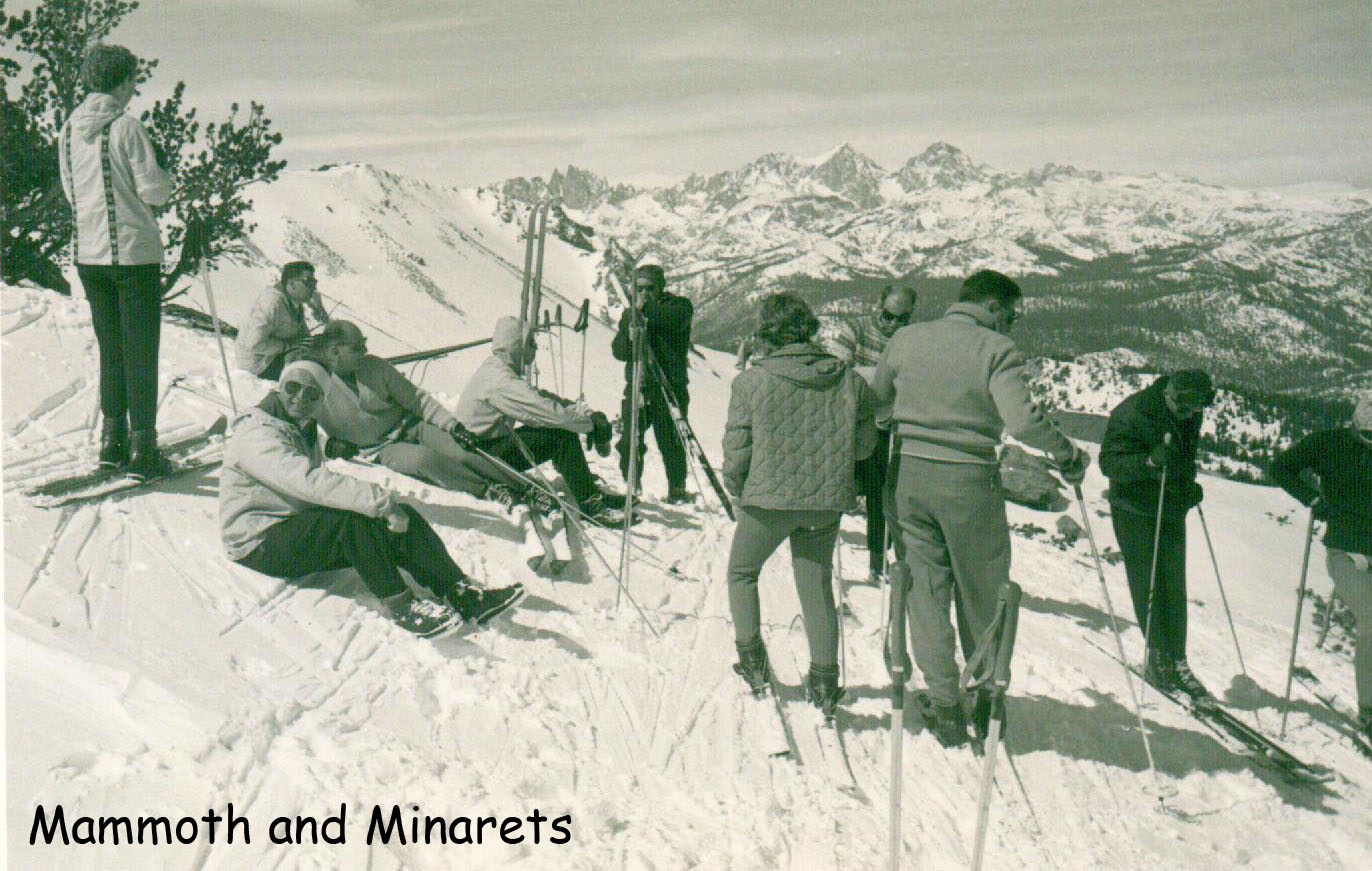
Founded in 1935, the San Diego Ski Club has an
.jpg) historic past and a brilliant future. Originally, San Diego area skiers hiked
up the wooded slopes of Cuyamaca Mountain and schussed down on wooden skis.
When Dave McCoy opened the first chair lift at Mammoth Mountain in the early
50's, the town did not have enough hotel beds to meet the demand. So, in
1959 SDSC engineers transported and erected a surplus WWII Quonset hut and
remodeled it to provide club skiers with their own accommodations. Set back in
the pines, the Ski Club Chalet houses 22 men and boys and 14 women and
girls.
historic past and a brilliant future. Originally, San Diego area skiers hiked
up the wooded slopes of Cuyamaca Mountain and schussed down on wooden skis.
When Dave McCoy opened the first chair lift at Mammoth Mountain in the early
50's, the town did not have enough hotel beds to meet the demand. So, in
1959 SDSC engineers transported and erected a surplus WWII Quonset hut and
remodeled it to provide club skiers with their own accommodations. Set back in
the pines, the Ski Club Chalet houses 22 men and boys and 14 women and
girls.
Ingrid P. Wicken, author of "Pray for Snow, the history
of skiing in Southern California" has graciously allowed us to quote the
following excerpt from her book concerning the early history of our club:
"The San Diego Ski Club" founded in the fall of 1937, was very active in the Cuyamaca Mountains in San Diego County. They have the distinction of being the most southwesterly club in the United States. The club started with forty members and held the first competitive ski meet, a giant slalom, in San Diego County at Mt Laguna in 1938.
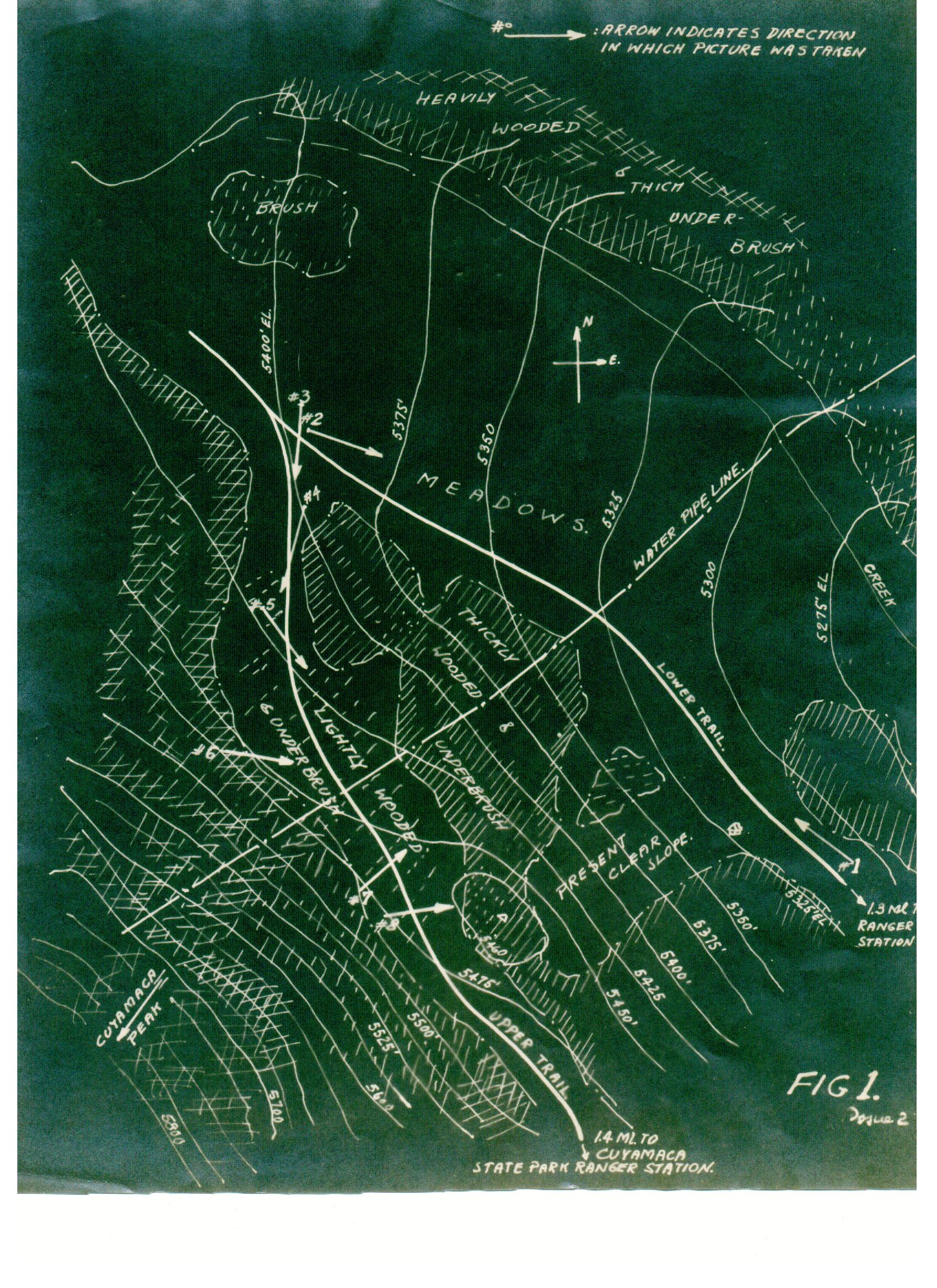
Club members had dreamed of locating, clearing, and skiing on a mountain in San Diego County. In the fall of 1938, the State Park Commission of California approved the plan of the San Diego Ski Club to clear specific undergrowth, rocks and stumps on Cuyamaca Mountain.
Christmas Day 1938 marked the culmination of nine consecutive weekends of work that resulted in molding a portion of the mountain into suitable ski terrain. The Forest Service supervised the clearing of brush and undergrowth and Milton S. Jackson and Arnold Cayser served as work party leaders. When all was said and done, 1,000 man-hours of labor had been contributed to the project. An average of over twenty people per weekend were involved in the work parties with a total of 160 individuals participating.
The ski-friendly Park Commission also approved the use of the Cuyamaca Rancho Fire Guard Station for the Club to use as a ski hut. The hut was located about twenty-five minutes by trail from the ski slope. A fire road provided a nice downhill run from slope to the hut. The hut was outfitted with a kitchen, fireplace, water heater, toilet facilities, running water, and telephone. Most of these facilities were luxuries that other ski huts at the time did not possess.
Milton S. Jackson, vice president of the San Diego Ski Club, and Arnold Cayser, San Diego Ski Club president, were responsible for discovering the ski terrain on Cuyamaca. Their efforts resulted in the development of the slope and facilities for the club. Because of Jackson's efforts, the Club resolved that the slope be named Jackson Meadow, and spearheaded the effort to give that name official recognition.
Nineteen thirty-nine was a year of many plans and improvements for the San Diego Ski Club. Their primary goal was to purchase a portable ski tow. The Club also planned to organize a ski school under the direction of San Diego Ski Club founder Gene S. Muehleisen, enter a ski team in southern California ski races, and host the second annual San Diego County Ski Meet and Victors Banquet.
The tow and the ski school became a reality. Anyone could use the tow as long as they contributed to operating expenses. A tow house and small structure was also built to provide storage for a first aid toboggan and equipment. Dorothy McClung, Harry Poschman, George Prentice, and Arthur Wullich instructed thirty students in the inaugural session of the ski school. Classes were held every Sunday at 11:00 and 1:00. The group also offered a special racing class and it was from this class that they chose skiers for their ski team.
San Diego County does not usually come to mind when the topic of skiing arises, but the following description of snow conditions at Cuyamaca Rancho State Park indicate that it often provided sufficient skiing in close proximity to the San Diego Ski Club:
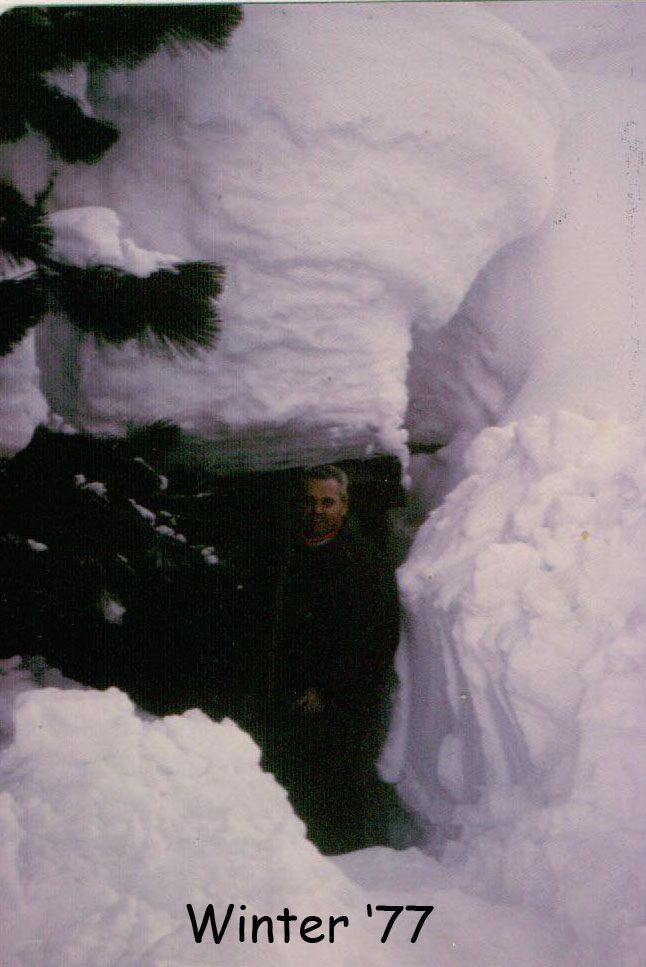
In the average, there are six to seven weekends of skiing weather although occasionally the sun gets the best of the snow and interrupts the season a few days. We have had snowfalls up to 7 ft. However, this occurs perhaps only once every three or four years. The ski slope faces northeast and is protected from the sun by high trees making a wonderful setting.
When local conditions were not conducive to skiing, the Club sponsored ski trips to Snow Valley, Big Bear, Mt. Baldy, Sand Gorgonio and Big Pines. In spite of the inconvenience of extensive travel, club members always looked forward to renewing old friendships with members of other ski clubs.
Even though the San Diego Ski Club was far removed from popular and well-established ski fields, they managed to distinguish themselves in many ways. They established the first ski patrol in southern California. Their patrol proved their skill and competence when rangers became snowbound on Cuyamaca Peak. Patrol members carried food and supplies to the rangers, and because of her work on the mission, Dorothy McClung became the first female members of the National Ski Patrol.
The club's interest in dryland skiing led to the establishment of a pine needle downhill course in the city park. The dryland slope provided a popular and entertaining introduction to skiing for many San Diego citizens.
This family oriented club has remained active since its inception, with an active racing schedule and club chalet at Mammoth Mountain. Two of the club's oldest continuous members are Art Wullich and Gene Muelheisen. Muelheisen served as club president from 1937 to 1939, and Wullich was very active in club activities, especially ski patrol duties.
Many thanks to Ingrid Wicken for allowing the above quote from her book. She also has a website on the early ski history and a collection of relevant periodicals from the period. California Ski Library
The San Diego Ski Club reflects the history of skiing
.jpg) in that its members actively pursue the
snow using the tools of alpine, telemark,
randonee, and snowboard. Whether racing
with other clubs on a course or finding
a special stash of powder in the backcountry,
all receive a warm welcome at the chalet.
in that its members actively pursue the
snow using the tools of alpine, telemark,
randonee, and snowboard. Whether racing
with other clubs on a course or finding
a special stash of powder in the backcountry,
all receive a warm welcome at the chalet.
Roster 1940-1941
Skinooz 1941 and 1942
SkiNooz 1945
Articles and Corporate Docs 1952
By-Laws 1984
Petitions to Department of Parks and Legislators regarding Cuyamaca Rope Tow
President's 1950 Letter stating Rules for Operation of rope tow
SDSC Mammoth Chalet History
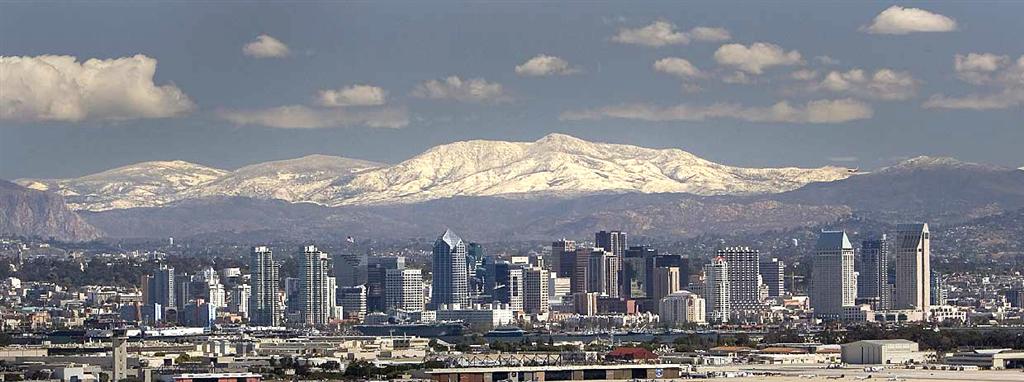
This has been a banner year for local snow in the Cuyamaca mountains, shown here overlooking the San Diego skyline. Your webmaster has been up the fire road used by SDSC old timers to get back to the warming hut. Its a fun little run with a snow load and frequently during the week you will have it to yourself.
"In the early days of the Club's history, both skiers and skiing were primitive. There were no developed areas in the San Diego mountains although a few hardy individuals had skied there on home-made equipment as early as 1930. Many members travelled northward to the San Bernardino Mts and beyond to ski and it was during this era that the Club established a reputation as the most travelled unit in the hickory circuit. But they soon wearied of this commuting to and from distant ski areas and decided to develop their own beautiful and accessible mountains less than two hours driving distance from the city.
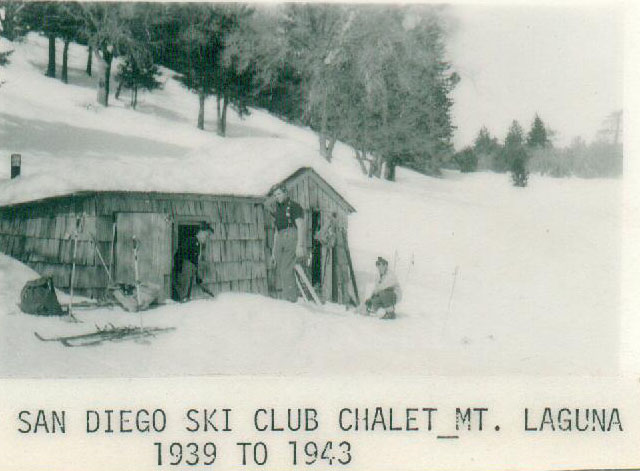
During the summer of 1939 the members explored the skiable areas in the Laguna and Cuyamaca Mountains for just the right slope. Finally the ideal site was located on the northeast elope of Cuyamaca Peak and was promptly named Jackson Meadows in honor of the Club's president at that time. Sleeves were rolled up and a series of work parties began. Ingenuity blossomed. Someone produced a dilapidated Model A Ford. Pulleys, chains, rope and all the ingredients for a ski tow appeared like rabbits from a magician's hat. At summer's end the muscle-bound members sat back on a log and proudly viewed their finished tow - all new and shining and waiting for snow. But the Club's summer activities didn't end there. The following summer the slope was widened and additional runs were cleared. The third year found them constructing a warming hut adjacent to the tow shack. (Yes, it blows and snows here too, despite the eternal sunshine myth). The shelter provides a double-feature: to supply warming and cooking facilities and to house the rescue toboggan and first aid equipment.
An efficient ski patrol covers the area and deserves a pat on the back for promoting safe and sane skiing. Over a period of six years only two accidents have occurred which necessitated the use of the toboggan. Besides keeping a wary eye on reckless boomers, the patrol has other functions. The Forest Service has twice called upon the patrol to transport food and fuel to snow-bound rangers atop Cuyamaca Peak. The Club is greatly indebted to the Forest Service for its splendid cooperation in making the development of the Cuyamaca area possible for skiers. As a further contribution it has made available to the Club the Cuyamaca Fire Guard Station during the winter months. This latter is a beautiful stone lodge with excellent accommodations for some thirty skiers and is located one and one half miles from the ski slope. Saturday nights there are something to remember-a crackling fire, hot buttered rums and someone giving forth with a little jive on a harmonica. Great sport, skiing! "
From Dorothy Wullich, "Skiing Down San Diego Way"
Full Text of "Skiing Down San Diego Way"
We are fortunate to have active SDSC members who were instrumental in building, maintaining and operating the Cuyamaca rope tow. Operators were certified to operate the rope tow. Five members including a certified person had to be present to fire up the Model A, which powered the rope tow. Fred Tamaschke was one such certified operator and below is an interview with him made in April of 2011.
Fred's interview
Building San Diego Ski Club Chalet 1959
from John McFrog on Vimeo.
Thanks to Jewel Levine for the content.
This text was received without an author cited. The title was San Diego Ski Club Chalet.
"Skiing in Southern California has always been an intermittent affair at best. San Diego Ski Club members recognized this fact in the early 1950's and began making the long drive to the Mammoth Mountain Ski area where Dave McCoy was running a rope tow operation. Accomodations then, as now, were inadequate to service the crowd of skiers using the slopes.
A few far sighted members recognized this fact and urged the club to purchase land and build their own facility. Their campaign paid off finally, and approval was voted by the membership to purchase a parcel of land. Plans were drawn up and construction of a chalet was proposed. To finance the construction of the Chalet, $25.00 dollar shares were sold to members, earning their owners chalet passes in lieu of interest. Additional loans of larger amounts were obtained from a few of the members, and these loans drew a standard 6% interest. To construct the Chalet, work parties were formed and for every two day weekend of work, a member was given a "work share", not redeemable for money, but earning for their owners free passes to the Chalet and preference for reservations. This arrangement is still in effect for work parties which are organized each year to perform maintenance upon the Chalet. The Chalet was designed with the basic premise being that we wanted low cost housing, and that_there were enough eating establishments to service our numbers. This decision allowed us more room for sleeping area and eliminated the need to police a cooking area each time the Chalet was closed down for the week.
At this date, accomodations in the Mammoth Mountain area have increased ten fold since we built our Chalet, and food establishments have increased proportionately and are within close range of the Chalet, making our original premise as valid now as before and our Chalet as attractive for its purpose now as it was in 1959. "